
Temperature is one of the most important factors when determining what a greenhouse will be like, as both its design and the equipment it incorporates will influence the internal temperature and how easily it can be controlled and maintained at optimal levels.
This is especially important in cases where outdoor temperatures are incompatible with the crops grown inside the greenhouse, as is the case in Reykholt, Iceland, where, thanks to the right equipment, it is possible to grow tomatoes all year round despite the adverse climate.
How can the temperature inside a greenhouse become too low?
Through a phenomenon known as thermal inversion, a common challenge that must be considered when designing a greenhouse. This process occurs during cold nights, when colder air becomes trapped inside, causing the temperature within the greenhouse to be even lower than the temperature outside. In extreme cases, this can lead to internal frost and serious problems for crops.
Although at first glance an internal heating system might seem like the optimal solution, the reality is that intelligent ventilation can provide a better solution at a lower cost.
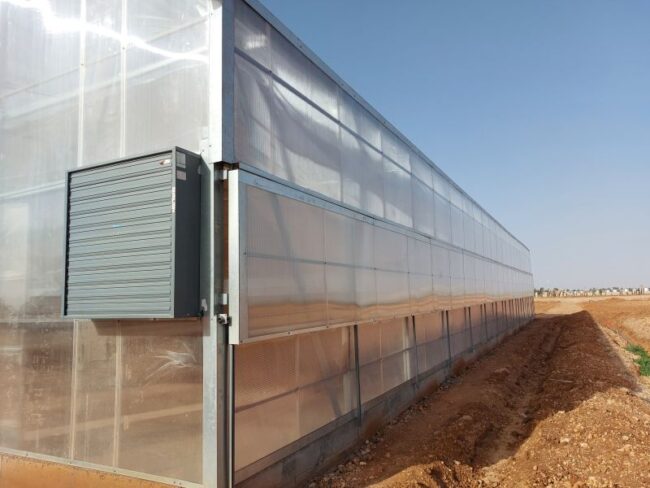
Both passive and forced ventilation systems make it possible to efficiently remove cold air, preventing temperature drops that, when combined with humidity, can be highly damaging. Passive ventilation systems, such as roof vents, characteristic of gothic greenhouses, or side vents, allow cold air to escape naturally. Forced ventilation systems, meanwhile, enable faster air exchange within the greenhouse. When used together and strategically positioned, they can create a “chimney effect” that regulates temperature by quickly extracting cold air from the interior.
The correct selection of the greenhouse and the technology it incorporates is essential to prevent phenomena such as thermal inversion from having a devastating impact on crops.

